TQC Micromotor
Programmable Motor technology is becoming central to equipment that must move precisely, repeatably, and with less manual adjustment. Manufacturers now combine motors with encoders, drive electronics, and configurable control functions. The result can be a compact actuator that positions a camera lens, feeds packaging film, or adjusts a valve. Yet “programmable” covers different architectures, so buyers should compare control interfaces, torque, speed range, feedback, and environmental ratings—not product labels alone.
The market context is broader than motors themselves. The International Federation of Robotics reported 541,302 industrial robots installed worldwide in 2023, with 4,281,585 operating globally. Those figures show the scale of automation demand, but they do not measure programmable-motor sales directly. That distinction matters. A supplier list should not treat robot growth as proof that every motor category is growing at the same rate. This guide examines manufacturers and suppliers through practical criteria: product range, documentation, customization, support, and suitability for real operating conditions. A motor that performs well on a clean test bench may behave differently beside a hot gearbox or under frequent starts. No single specification tells the whole story.
A verified, attributable quotation from a named Programmable Motor specialist was not available in the supplied material, so none is invented here. That limitation is worth stating plainly. Before selecting a vendor, readers should verify current datasheets, certifications, and support terms directly with the manufacturer.
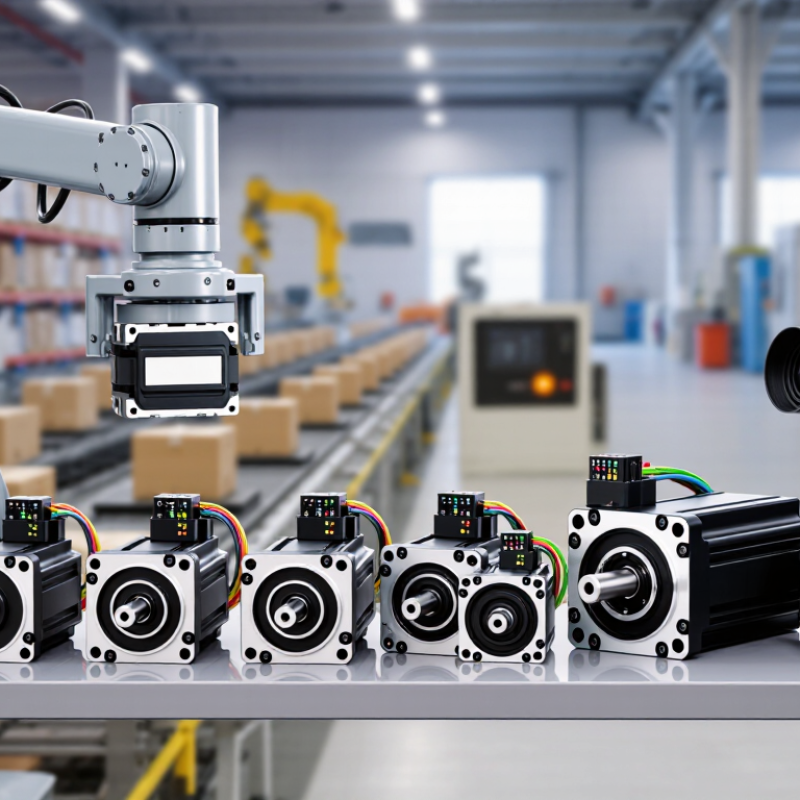
A programmable motor is a motor paired with a controller that can follow defined movement instructions. The controller sets targets such as speed, direction, position, and acceleration. Depending on the system, the motor may be a stepper, servo, or another motor type. Some setups use sensors to report position or speed. The controller compares this feedback with the target and adjusts the motor when needed. Small steps matter.
For example, a motor might move a conveyor gate 30 degrees, pause, then return at a slower speed. A stored motion profile makes that sequence repeatable, though real results depend on load, wiring, and setup. Open-loop systems do not confirm the actual position, so missed steps can go unnoticed. Closed-loop systems can detect some errors, but they still need correct tuning.
Tips: Check the load, travel distance, and required accuracy before choosing a motor and controller. Test the motion under real operating conditions, not only on an empty bench. Listen for vibration and watch for excess heat. One detail is easy to overlook: a repeatable command does not guarantee perfectly repeatable motion if the mechanism loosens or the load changes.
Programmable motor systems are useful wherever motion must change with the task. In packaging lines, a motor can slow a conveyor as bottles approach a filling station, then accelerate it after the bottles are capped. Adjustable speed and positioning help reduce spills and misalignment. Small timing errors still happen, especially when loads vary.
Robotic equipment uses programmed motors to repeat precise movements, such as moving a component between a feeder and an assembly fixture. Feedback from encoders can help the controller detect position errors and correct movement. In laboratory instruments, motors may position sample trays or adjust pumps at controlled rates. Smooth movement matters. Vibration can affect delicate measurements.
Programmable drives also support building systems, agricultural machinery, and automated doors. A ventilation fan can change speed as temperature or airflow demand shifts, while irrigation equipment can move valves in measured steps. The right setup depends on load, duty cycle, environment, and required accuracy. A motor that performs well during a brief test may overheat during continuous operation. Engineers should check heat, noise, and stopping behavior under real working conditions; those details are easy to underestimate.
Programmable motors are used in applications such as robotics, packaging, and automated manufacturing, where controlled speed changes support repeatable motion. This illustrative profile shows a motor accelerating, running at constant speed, and decelerating; it is not measured product or market data.
Choosing a programmable motor supplier requires more than comparing torque and price. Ask for test data on speed stability, positioning repeatability, thermal rise, and performance under your actual load. Check whether the controller supports your communication protocol, tuning tools, parameter backups, and recovery after power loss. Small details matter. The IEA’s 2011 report, Energy-Efficiency Policy Opportunities for Electric Motor-Driven Systems, estimates that motor-driven systems use about 45% of global electricity. The figure is broad and dated, but it makes efficiency curves and duty-cycle data worth examining. Request measured efficiency across operating points, not just a peak value.
Supplier evaluation should also cover integration and support. The International Federation of Robotics reported 4,281,585 industrial robots operating worldwide in 2023 in its World Robotics 2024 report. That installed base makes dependable motor-control integration, clear documentation, and service capacity practical concerns. Ask about firmware updates, spare-part lead times, sample code, and escalation procedures. Then test a unit with the real payload, cable length, and ambient temperature. Watch for missed commands, vibration, and heat after repeated starts. A polished demo can hide rough edges. Compare claims with logged test results, and note what the supplier cannot yet verify.
Direct motor manufacturers configure winding, encoder, drive, and communication options around a customer’s operating requirements. They are useful when a machine needs repeatable torque and speed across production runs. Ask for test data at the actual load, not just a no-load speed figure.
Motion-control integrators combine motors with drives, controllers, and software. They can help tune acceleration, position feedback, and fault handling for packaging equipment or small robotic axes. That matters. Their expertise may be strongest in system setup, rather than motor construction itself.
Custom engineering suppliers and OEM partners adapt motor dimensions, connectors, mounting patterns, or firmware for specialized equipment. Distributors and technical resellers, meanwhile, can compare several motor types and help with availability, sizing, and replacement parts. They may not control every design detail. Check who handles troubleshooting and whether sample units are available before committing to a production order. A clear supplier should explain limits, lead times, and what changes require new validation.
One awkward truth: a detailed specification can still miss vibration, heat, or cable-routing problems in the finished machine. Small pilot tests often reveal those gaps.
Choosing a programmable motor supplier starts with the load, not the catalogue. Record the required torque, speed range, duty cycle, and expected operating temperature. Then compare motor ratings, encoder options, communication protocols, and controller compatibility. Ask for test data under conditions close to your actual application. A brief bench test can reveal startup hesitation, vibration, or heat that a specification sheet may not show. Small details matter.
Integration depends on clear documentation and timely engineering support. Confirm wiring diagrams, configuration tools, firmware procedures, and fault-code definitions before ordering. Check how the motor behaves during power loss, emergency stops, and repeated direction changes. These details are easy to miss when a prototype runs smoothly for only a few minutes. Leave room for adjustment; real installations rarely match the first design perfectly.
After-sales support should include realistic response times, troubleshooting steps, spare-part availability, and repair options. Ask who handles technical questions and what information they need, such as controller logs or operating conditions. A capable supplier should explain limits plainly, rather than promise that every issue has a quick fix. Keep integration notes and commissioning results; they make later service conversations more useful. One awkward truth: even a well-selected motor can underperform if mounting stiffness or cable routing is overlooked.
Compare torque, speed stability, positioning repeatability, and thermal rise. Ask for test data under your expected load.
A bench test can reveal vibration, startup hesitation, and excess heat. Use the real payload, cable length, and ambient temperature.
Confirm protocol compatibility, tuning tools, parameter backups, and recovery after power loss. Small details matter.
Request measured efficiency at several operating points, not only a peak figure. Check data against your duty cycle.
Motor manufacturers configure motor options. Integrators combine motors, drives, controllers, and software. Custom suppliers adapt dimensions or firmware.
Check sample availability, lead times, spare parts, and who handles troubleshooting. Ask which design changes require fresh validation.
Look for wiring diagrams, fault-code definitions, realistic response times, and repair options. Keep controller logs and commissioning notes.
Yes. Mounting stiffness or cable routing can cause problems. I might focus too much on motor data; the finished machine matters.
A Programmable Motor combines a motor with control capabilities that allow its speed, position, direction, or movement sequence to be adjusted for a specific task. By receiving programmed instructions and responding through its control system, it can support precise, repeatable operation. Programmable motor systems are used in applications such as automation, robotics, material handling, medical equipment, and other settings where coordinated motion and dependable performance matter.
Choosing a supplier involves assessing technical expertise, product range, customization options, quality processes, and experience with the intended application. Suppliers may specialize in motors, integrated motor-and-controller systems, or complete motion solutions. Before making a selection, confirm that the motor and controls are compatible with the equipment, operating conditions, and installation requirements. Clear documentation, responsive technical assistance, warranty coverage, and access to maintenance or replacement parts can also help ensure reliable integration and long-term support.
