TQC Micromotor TQC Micromotor

Top 10 Asynchronous Motor Types for Global Buyers?

Time:2026-10-21 Author:Aria
0%

Choosing the right Asynchronous Motor is rarely a simple catalogue decision. Global buyers must examine duty cycles, voltage systems, ambient conditions, efficiency classes, and maintenance access. A motor running beside a dusty cement line faces different demands from one installed in a clean food-processing plant. Small details matter. Bearing seals matter. Insulation quality matters.

Nikola Tesla, a foundational expert in alternating-current motor technology, stated, “The alternating current motor is the motor of the future.” His vision still influences today’s squirrel-cage, wound-rotor, slip-ring, single-phase, and three-phase designs. Yet the market has changed. Buyers now compare energy consumption, variable-frequency-drive compatibility, starting torque, noise, thermal protection, and lifecycle cost. The cheapest unit may become expensive after months of overheating or repeated bearing replacement.

This guide examines ten Asynchronous Motor types for international buyers. Each section connects construction with practical purchasing needs. We consider where each motor performs well, where it struggles, and which specifications deserve closer inspection. Some classifications overlap, and manufacturers may describe similar designs differently. That is an unavoidable weakness in many product comparisons. Specifications can also look impressive while hiding limited service support or unclear testing conditions.

A reliable decision needs evidence. Check certification documents, factory test reports, efficiency data, warranty terms, and spare-parts availability. Ask how the motor behaves under real load, not only under laboratory conditions. Think beyond the nameplate. One overlooked temperature rise can change the entire project outcome.

The best choice is not always the most powerful motor. It is the one that matches the application honestly.
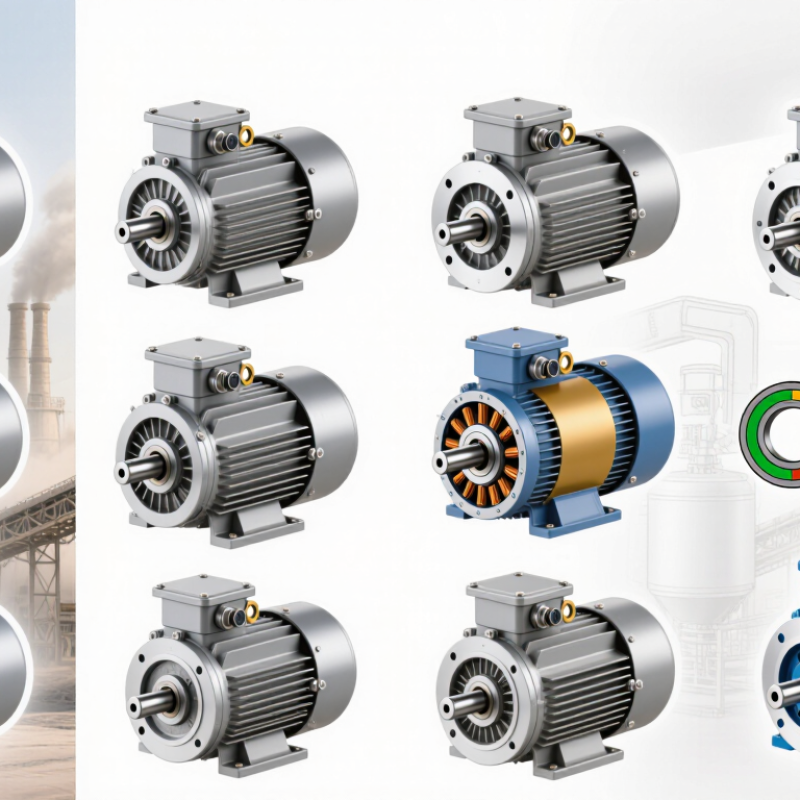
Top 10 Asynchronous Motor Types for Global Buyers?

What Is an Asynchronous Motor and How Does It Work?

What Is an Asynchronous Motor and How Does It Work?

For global buyers comparing the top 10 asynchronous motor types, the operating principle remains similar. A three-phase stator receives alternating current and creates a rotating magnetic field. This field turns at synchronous speed, calculated as 120 times frequency divided by pole count. The rotor moves slightly slower. That difference is called slip, and it induces rotor current and produces torque. The rotor follows.

Most industrial asynchronous motors use squirrel-cage rotors because they are simple, durable, and require little maintenance. Wound-rotor designs can provide higher starting torque, while single-phase versions suit smaller pumps, fans, and workshop equipment. The explanation sounds clean. Real motors are less tidy. Heat, voltage imbalance, bearing friction, harmonics, and poor loading can reduce performance.

The International Energy Agency reported that electric motor systems consume about 53% of global electricity and nearly 70% of industrial electricity in its Energy Efficiency Market Report 2016. That figure explains why buyers should examine the complete drive system, not only the nameplate. IEC 60034-30-1 efficiency classes help compare motor losses under defined conditions. However, an IE rating does not guarantee equal field performance. A motor running at light load may waste energy, especially with an oversized frame. Variable-frequency drives can regulate speed and reduce throttling losses, but cable length, switching frequency, cooling, and harmonics need review. Check actual load profiles, starting requirements, ambient temperature, enclosure protection, and service conditions before selecting among asynchronous motor types.

Top 10 Asynchronous Motor Types for Global Buyers

This chart compares the theoretical synchronous speed of common asynchronous motor configurations at 50 Hz. Actual rotor speed is slightly lower because of slip.

Synchronous speed is calculated using Ns = 120 × frequency ÷ number of poles. For example, a four-pole motor at 50 Hz has a synchronous speed of 1,500 rpm, while its operating speed is typically lower under load.

The Top 10 Asynchronous Motor Types Explained

The Top 10 Asynchronous Motor Types Explained

The “top” motor depends on load, voltage, starting torque, speed control, and operating hours. In field selection, a three-phase squirrel-cage motor often leads the list. It is durable, efficient, and simple to maintain. A wound-rotor motor suits heavy starting loads, such as conveyors and crushers. Its external resistance improves starting control, but maintenance demands are higher. A single-phase split-phase motor fits small fans and pumps. It offers modest starting torque. Not every workshop needs more.

A capacitor-start motor delivers stronger starting torque for compressors and loaded pumps. A permanent split capacitor motor runs quietly in fans and blowers. A capacitor-start, capacitor-run motor balances starting power with smoother operation. Shaded-pole motors serve small, low-cost appliances, though their efficiency remains limited.

Dual-speed asynchronous motors support two fixed operating speeds. They work well in ventilation systems with changing airflow needs. A brake motor stops quickly through an integrated braking unit. A vertical motor handles upward shaft loads in pumps, but alignment must be checked carefully.

The tenth type is the vertical hollow-shaft motor, commonly paired with deep-well pumping equipment. Installation errors can create vibration, seal wear, and early bearing damage. That detail is easy to overlook.

Buyers should compare rated power, duty cycle, insulation class, enclosure protection, noise, and service conditions. Test reports and applicable electrical certifications matter more than attractive catalog claims. Some selections still fail because the real load was measured poorly. A site survey can prevent that expensive mistake.

Key Differences Among Asynchronous Motor Designs

Top 10 Asynchronous Motor Types for Global Buyers: Key Differences Among Asynchronous Motor Designs

Asynchronous motors remain central to industrial power systems.

The International Energy Agency estimates that electric motor systems consume about 50% of global electricity.

The U.S. Department of Energy also reports that motor-driven equipment uses roughly 68% of electricity in American manufacturing.

These figures make design selection more than a purchasing detail.

The most common type is the three-phase squirrel-cage motor. It offers strong durability, low maintenance, and simple construction.

Wound-rotor and slip-ring motors provide higher starting torque, but brushes require inspection.

Deep-bar and double-cage designs improve starting performance without adding external resistors.

Single-phase options include split-phase, capacitor-start, capacitor-run, shaded-pole, and dual-value capacitor motors. Each suits different loads, from fans to conveyors.

The differences become clearer at the shaft.

A capacitor-start motor may deliver strong starting torque, while a shaded-pole motor usually sacrifices torque for low cost. Three-phase designs generally provide smoother rotation and better efficiency.

IEC 60034-30-1 defines efficiency classes from IE1 to IE5, helping buyers compare tested performance.

However, efficiency labels do not reveal every operating risk. A high-efficiency motor can still fail early under dust, voltage imbalance, or frequent starts. I have seen buyers overlook this practical gap.

Check duty cycle, enclosure rating, ambient temperature, frequency, and service conditions before comparing quotations.

How Global Buyers Should Compare Motor Specifications

When comparing the top 10 asynchronous motor types, global buyers should start with operating conditions, not appearance. A compact squirrel-cage motor may suit a conveyor, while a wound-rotor design handles demanding starting torque. Slip-ring, brake, dual-speed, and vertical motors serve different mechanical needs. The correct choice depends on the complete specification sheet.

Check rated power, voltage, frequency, phase, speed, and full-load current together. A 50 Hz motor may not perform as expected on a 60 Hz supply. Confirm the number of poles and rated torque. Starting current matters in factories with limited electrical capacity. Efficiency class affects long-term energy cost, but efficiency alone can mislead. Review duty rating, service factor, insulation class, cooling method, and allowable temperature rise.

Protection details deserve equal attention. Match the IP rating to dust, water, and washdown exposure. Confirm frame size, shaft dimensions, mounting position, terminal-box direction, and cable entry. For variable-frequency drives, check inverter suitability and low-speed cooling performance. I have seen buyers compare only kilowatts and price, then discover incompatible mounting dimensions. That mistake is expensive. Datasheets can also contain unclear tolerances, so request certified test values and written clarification. Leave room for doubt. Site altitude, ambient temperature, load cycling, and maintenance skills may change the practical choice.

Applications, Standards, and Selection Factors by Market

Top 10 Asynchronous Motor Types for Global Buyers?

Market fit matters more than catalogue ratings. The ten common options are squirrel-cage, wound-rotor, slip-ring, double-cage, deep-bar, brake, explosion-protected, single-phase split-phase, capacitor-start, and shaded-pole motors. Squirrel-cage units suit pumps, fans, compressors, and conveyors because they are simple and durable. Wound-rotor and slip-ring designs support high starting torque in cranes and mills. Capacitor-start and shaded-pole motors serve smaller appliances and light machinery. These choices are practical, but not interchangeable.

The International Energy Agency reports that electric motor systems use about 50% of global electricity, making efficiency a purchasing issue, not a minor specification. IEC 60034-30-1 defines IE efficiency classes for many three-phase motors. European buyers should also review Regulation (EU) 2019/1781. In the United States, NEMA MG 1 remains widely referenced. China commonly applies GB/T 18613, while India uses IS 12615. Frequency, voltage, enclosure, duty cycle, and ambient temperature must match the destination market.

Check the installation details.

A 50 Hz motor may perform differently on a 60 Hz supply. A coastal plant may need stronger corrosion protection. Dusty grain facilities require careful enclosure selection and certified hazardous-area protection. One imperfect shortcut is choosing only by purchase price. Energy losses, spare bearings, customs documentation, and local service can change the real cost. The IEA’s Energy Efficiency 2023 report also reinforces the value of efficient equipment and system-level management. Selection should be reviewed by an engineer familiar with the actual site, not only by a trading sheet.

FAQS

What should global buyers compare before choosing an asynchronous motor?

Start with operating conditions. Check power, voltage, frequency, phase, speed, torque, and full-load current together. Appearance is not enough.

Which motor type suits conveyors, pumps, fans, and compressors?

A squirrel-cage motor often fits these applications. It is simple, durable, and usually easy to maintain. Confirm starting requirements first.

When is a wound-rotor or slip-ring motor useful?

These designs suit cranes, mills, and equipment needing high starting torque. They can support demanding starts better than simpler designs.

Can a 50 Hz motor operate on a 60 Hz supply?

It may perform differently. Speed, current, torque, and heating can change. Obtain written confirmation before connecting the motor.

Why do frame size and shaft dimensions matter?

Incorrect dimensions can stop installation. Check mounting holes, shaft size, mounting position, terminal-box direction, and cable entry.

What protection details should buyers review?

Match the enclosure rating to dust, water, and washdown exposure. Coastal sites may also need stronger corrosion protection. Do not guess.

How should buyers evaluate motors used with variable-frequency drives?

Confirm inverter suitability and low-speed cooling performance. Slow operation can reduce cooling and increase temperature. The datasheet may not explain every limitation.

Do efficiency ratings determine the best purchase?

No. Efficiency affects energy costs, but duty cycle, service factor, maintenance, and installation also matter. A cheaper motor may cost more later.

Which documents and site details deserve confirmation?

Request certified test values and written tolerance details. Share altitude, ambient temperature, load cycling, and maintenance conditions. Leave room for doubt.

Why should market requirements be checked before ordering?

Voltage, frequency, enclosure, duty cycle, and temperature limits differ by destination. Local technical rules and documentation requirements may affect acceptance. A trading sheet is not enough.

Conclusion

This guide explains how an Asynchronous Motor converts electrical energy into mechanical motion through the interaction between a rotating magnetic field and the rotor, which operates at a slightly lower speed than the synchronous field. It introduces ten major types, including squirrel-cage, wound-rotor, single-phase, three-phase, dual-speed, brake, explosion-protected, high-efficiency, slip-ring, and specialized variable-frequency designs. Each type is compared by construction, starting performance, speed control, efficiency, maintenance needs, and suitability for different operating conditions.

For global buyers, the article provides a practical framework for comparing rated power, voltage, frequency, speed, torque, enclosure protection, insulation class, cooling method, mounting arrangement, and duty rating. It also discusses how industrial applications, regional electrical standards, environmental conditions, certification requirements, installation practices, and after-sales support can influence selection. By balancing technical specifications, lifecycle cost, reliability, and market compliance, buyers can choose an Asynchronous Motor that matches both operational demands and long-term purchasing goals.

Aria

Aria

Aria is a dedicated marketing professional with a deep passion for innovative strategies and a keen understanding of our company's product offerings. With a wealth of experience in the industry, Aria excels at crafting engaging content that highlights the unique features and benefits of our......