TQC Micromotor
A Servo Motor is an essential component in modern automation and robotics. Its precision and control make it popular in various applications. These motors are designed to provide accurate motion, making them crucial for tasks that require fine adjustments. Knowing how a Servo Motor works can unlock new possibilities in engineering and technology.
In operation, a Servo Motor uses feedback systems for precise positioning. It typically consists of a motor, a sensor, and a controller. The motor receives signals from the controller, while the sensor provides real-time data on its position. This closed-loop system ensures that the motor performs accurately. However, not all Servo Motors are the same. Each has its specifications and limitations, which must be understood.
While Servo Motors are powerful, they require careful calibration and setup. Mistakes in configuration can lead to performance issues. Understanding the intricacies of these motors is vital, as mishandling can result in wasted resources. Thus, a deeper dive into the functions and mechanics of Servo Motors will enhance our grasp of their capabilities and potential challenges.
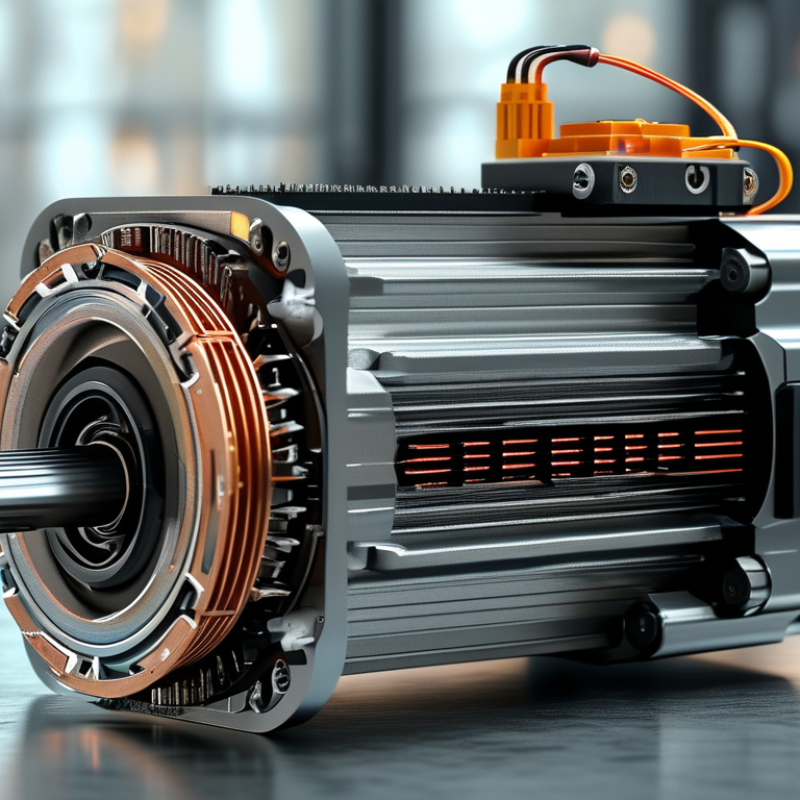
In modern engineering, defining a servo motor involves understanding its intricate components and their interactions. A servo motor is typically made up of a motor, a feedback device, and a controller. The motor converts electrical energy into precise mechanical movement. This precise control is crucial across various applications, including robotics, CNC machinery, and aerospace systems. According to reports by the International Society of Automation, the global servo motor market is projected to grow by nearly 20% over the next five years.
Key characteristics define servo motors in engineering. They offer remarkable torque-to-weight ratios and often operate under closed-loop control systems. Feedback devices like encoders provide real-time position and speed data, enhancing accuracy. However, challenges remain. Installations can be complex, requiring significant technical expertise. Additionally, the vibrational noise generated during operation may impede certain applications. Understanding the balance between performance and these drawbacks is vital for engineers when selecting servo motors.
Recent trends show a shift toward miniaturized servo motors, with advancements in materials and control algorithms. This shift enables integration into smaller devices while maintaining functionality. Yet, cost factors and energy consumption still pose concerns. Addressing these issues requires continuous innovation and collaboration among industry professionals.
Servo motors are integral to various applications, delivering precision and control. They consist of key components that define their performance. The primary parts include the motor, sensor, and controller. The motor provides rotation and torque. The sensor monitors the position, while the controller processes input signals to adjust the motor's action.
According to a report by MarketsandMarkets, the global servo motors market is projected to reach $15.6 billion by 2025. This growth is primarily driven by the demand for automation in industries such as manufacturing and aerospace. Servo motors excel in applications requiring high accuracy, like robotic arms and CNC machines. Their structure allows for feedback mechanisms to ensure consistent performance.
Tip: When choosing a servo motor, consider the load requirements and application specifics. The efficiency of a servo motor can vary significantly based on its design. Research and test various models to find the best fit for your needs. Remember, the smallest component can impact overall performance.
Servo motors are precise devices that control angular or linear position. They are commonly used in robotics, CNC machinery, and automation systems. The key to their performance lies in feedback systems, which enhance their accuracy significantly.
Feedback systems use sensors to gather real-time data about the motor’s position. This data is compared with a desired position set by the user or controller. If there’s a discrepancy, the system adjusts the motor’s output to correct it. This ensures high precision in movement. For example, if a servo motor should rotate to 90 degrees but ends up at 85 degrees, the feedback loop detects this error and makes adjustments accordingly.
Tips: When working with servo motors, ensure the feedback sensors are calibrated properly. In many cases, improper calibration can lead to performance issues. Additionally, consider the type of feedback system that suits your application best—analog or digital, each has its pros and cons. Remember, small adjustments in feedback settings can lead to big changes in precision. Always experiment to find the optimal setup for your specific needs.
Servo motors play a vital role in various industrial applications due to their precision and efficiency. According to a recent report by Markets and Markets, the global servo motor market is expected to reach $10 billion by 2027, with a CAGR of 7.8% from 2022 to 2027. This growth is driven by the increasing demand for automation in manufacturing and robotics.
One significant benefit of servo motors is their ability to provide precise control over motion. They enable accurate positioning, which is crucial in industries like aerospace and automotive. In robotic applications, servo motors enhance performance by enabling quick, exact movements. Industries are leveraging these capabilities to improve productivity and reduce downtime, resulting in overall operational efficiency.
Tip: When selecting a servo motor, consider factors like torque, speed, and feedback systems for optimal performance. Evaluating these elements can lead to better project outcomes and reduced time lost during operations.
However, there are challenges. Not all applications require the precision that servo motors provide. In some cases, the cost of implementing servo systems can outweigh their benefits. It's essential to evaluate the specific needs of your operations carefully. A failure to do so could lead to unnecessary investments in technology that may not deliver the anticipated results.
Servo motors are gaining traction in various industries due to advancements in control systems and smart technologies. Current trends highlight the integration of IoT in servo motor applications. According to a recent report by MarketsandMarkets, the global servo motor market is projected to reach $10 billion by 2025, with a CAGR of over 6%. This growth signifies a shift towards enhanced automation and precision in manufacturing processes.
One innovative development is the rise of energy-efficient servo motors. These solutions utilize feedback systems to optimize performance and reduce power consumption. Recent studies indicate that energy-efficient designs can lower operational costs by up to 30%. However, the transition to these technologies can be challenging for manufacturers. Not all facilities are equipped to implement advanced systems seamlessly. Additionally, the high initial investment in smart servo technologies might discourage smaller enterprises.
Safety and reliability are also critical areas of focus. As servo motors become more integrated into robotic systems, the need for fail-safe designs grows. Addressing these issues requires continuous investment in research and development. Companies must ensure adaptability in their systems while being cautious of potential implementation risks. This balance between innovation and practicality remains a pressing concern for industry leaders.
: A servo motor consists of the motor, sensor, and controller. Each part plays a crucial role in its performance.
Feedback systems use sensors to provide real-time position data, adjusting the motor's output for accuracy.
They offer precise control over motion, which is vital for high-accuracy tasks in sectors like aerospace and robotics.
Consider factors like load requirements, torque, speed, and feedback systems for optimal performance.
It can lead to significant performance issues, reducing precision and efficiency in operations.
Yes, not every application needs their high precision, and costs might outweigh benefits in some scenarios.
Digital systems often offer better resolution and reliability, which can improve overall performance.
Yes, even minor tweaks can lead to significant changes in precision and control. Always experiment.
Industries like manufacturing, aerospace, and robotics benefit due to their need for precision and efficiency.
They enhance performance and reduce downtime, leading to better productivity in industrial applications.
A servo motor is a crucial component in modern engineering, distinguished by its ability to provide precise control of angular position, velocity, and acceleration. Defined primarily by its feedback systems, a servo motor utilizes a closed-loop control mechanism that enhances precision and accuracy in various applications. The key components of a servo motor include a motor, a controller, and a feedback device, which work together to ensure seamless operation.
In industrial applications, servo motors are favored for their efficiency and reliability, delivering benefits such as improved productivity and reduced energy consumption. Current trends in servo motor technology focus on advancements in miniaturization, smart features, and integration with IoT systems, paving the way for future innovations that promise to revolutionize automation and robotics. These updates further solidify the role of servo motors as essential tools in contemporary engineering practices.
