In the realm of industrial automation, the term "Precision Gear Motor" holds significant importance. These motors combine precise movement with durable construction. According to Dr. Emily Chen, a leading expert in robotics, "Precision Gear Motors are the backbone of many advanced systems." This statement underscores their critical role in various applications ranging from robotics to conveyor systems.
A Precision Gear Motor integrates a motor and a gearbox. This combination allows for efficient torque transmission and high rotational precision. Many industries rely on these motors for their ability to perform under high-stress conditions. However, as with any technology, challenges exist. Selecting the right motor for a specific application requires careful consideration of load, speed, and size.
Despite their advantages, Precision Gear Motors can face reliability issues over time. For example, wear and tear can affect performance. Regular maintenance is vital to ensure longevity. Understanding these components can enhance decision-making for engineers and designers. Precision is not just in the name; it reflects the intricate balance of speed, efficiency, and durability required in today's machinery.
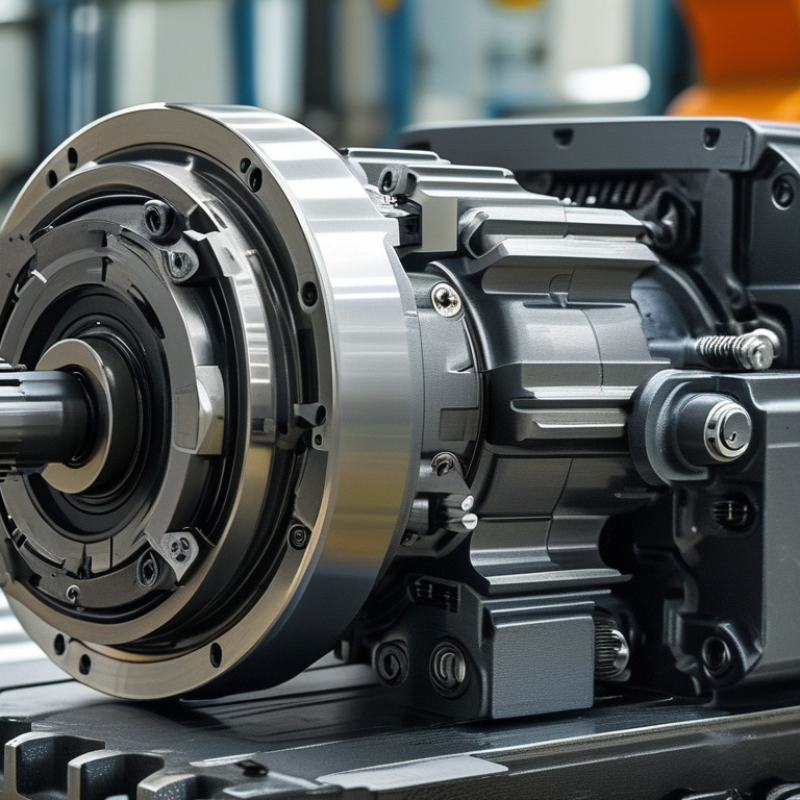
What is a Precision Gear Motor? Definition and Key Components
A precision gear motor is a sophisticated device that combines a motor and a gearbox. This integration enhances performance and efficiency in various applications. The key components of a precision gear motor include a motor, gears, and a housing. Each part plays a vital role in the motor's overall functionality.
The motor generates power, while the gears adjust the output speed and torque. Precision is critical for accurate movements, especially in robotics and automation. The gears reduce the motor's speed while increasing its torque, leading to smooth and controlled operation. However, manufacturing these components requires high-quality materials and precise engineering, which can be costly.
In practice, precision gear motors must be chosen carefully. Each application has specific requirements, such as torque and speed. Engineers often face challenges in selecting the right motor gear combination. Oversized motors can lead to energy inefficiency, while undersized motors may not meet performance demands. Understanding these aspects is crucial for achieving optimal results and ensuring reliability in real-world applications.
How Precision Gear Motors Operate: Mechanical and Electrical Principles
Precision gear motors play a crucial role in various applications. Their operation combines mechanical and electrical principles to achieve efficiency. At the core, they consist of a motor linked to gears that adjust speed and torque. This synergy allows for precise movement, essential in tasks requiring accuracy.
Mechanical principles are fundamental. Gears transfer motion from the motor, modifying its output speed and torque. Gears reduce speed while increasing torque, allowing machines to perform heavy-duty tasks. Electrical principles involve the motor's function. Electromagnetic fields enable the motor to operate efficiently, translating electrical energy into mechanical motion.
Tips to consider include selecting the right gear ratio for your application. An improper ratio may lead to inefficiency or even gear damage. Additionally, monitor motor heat during operation. Excess heat can indicate issues that might lead to motor failure. Regular maintenance helps ensure longevity and optimal performance. Always keep an eye on load conditions to avoid exceeding motor capacity.
Applications of Precision Gear Motors in Robotics and Automation Industries
Precision gear motors play a crucial role in the robotics and automation industries. They provide accurate and reliable motion control. This is key for applications requiring precision, such as robotic arms and automated assembly lines. In these settings, the motors allow for smooth and consistent movement, essential for tasks like picking and placing items. Their efficiency reduces energy consumption, which is beneficial for long-term operations.
Robotics demands high torque and speed control, and precision gear motors deliver on both fronts. They can adapt to different loads and operational speeds. This adaptability is particularly valuable in environments where conditions may change frequently. Engineers often face challenges when integrating these motors into existing systems. Not all setups are compatible. Sometimes, recalibrations are necessary. These issues can lead to downtime, which impacts productivity.
In automation, precision gear motors are used in conveyor systems and robotic inspection. Here, they ensure products are moved accurately and inspected thoroughly. However, mistakes in configurations can lead to costly errors. Ensuring proper setup and maintenance is vital. The balance of performance and safety must always be considered. Even minor miscalculations can disrupt an entire operation. Thus, continuous learning and adjustment are essential in this field.
Key Performance Metrics: Torque, Speed, and Efficiency in Gear Motors
Precision gear motors are essential in various applications, making their performance metrics crucial for effective use. Torque, speed, and efficiency are the key elements to consider. Torque defines the rotational force produced by the gear motor. Higher torque allows for better handling of heavier loads. In many cases, users discover their motors are underperforming due to insufficient torque. Understanding the required torque for a specific application can prevent these issues.
Speed is another vital metric. It influences how quickly an application can operate. A balance is necessary; high speed could lead to reduced torque. Users often struggle to optimize both factors. Finding the right speed involves calculations, matching it to the torque requirements.
Efficiency is also important; it determines how well a motor converts input energy into mechanical energy. Power loss through heat and friction can significantly reduce efficiency. Many users overlook maintenance, which can further decrease a motor's efficiency.
To maximize performance, ongoing evaluation of these metrics is essential. Testing different configurations can lead to surprising results. It is crucial to document findings and adjust as necessary. Adapting to specific needs can enhance the motor’s functionality. A well-tuned gear motor operates optimally, saving energy and improving overall reliability. Alongside these metrics, continuous learning and adaptation are important for long-term success.
Comparative Analysis: Precision Gear Motors vs. Standard Gear Motors
Precision gear motors offer enhanced accuracy and performance compared to standard gear motors. They are commonly used in robotics, automation, and CNC machinery. The key difference lies in their design. Precision gear motors often feature higher tooth counts and tighter tolerances. This results in reduced backlash and improved efficiency.
Standard gear motors are simpler. They can handle basic tasks but may suffer from slippage and inaccuracies. Precision gear motors, however, excel in applications requiring consistent performance. Their higher initial cost is often justified by the increased longevity and reliability.
**Tips: Evaluate your needs carefully.** Consider the application intensity and required precision. If the project demands exact movements, a precision gear motor is worth the investment.
Additionally, regular maintenance of both types ensures optimal performance. While standard motors may need more frequent checks, precision motors can often go longer between services. Understanding your system's demands enhances decision-making.
**Remember:** Not every project requires a high-precision gear motor. Sometimes, the basic option suffices. Think critically about your requirements before choosing the motor type.
Comparison of Efficiency: Precision Gear Motors vs. Standard Gear Motors
FAQS
: A precision gear motor combines a motor and gearbox to enhance performance in various applications.
The main components include a motor, gears, and housing. Each component is essential for functionality.
Precision ensures accurate movements, especially in automation and robotics, affecting overall performance.
Torque is the rotational force, while speed measures how fast an application operates. They must be balanced.
Insufficient torque can lead to underperformance, unable to handle heavier loads effectively.
Efficiency measures how well a motor converts energy into mechanical power. Poor maintenance can reduce efficiency.
Precision gear motors offer better accuracy and reliability, while standard motors handle simpler tasks but may lack precision.
Choose one when exact movements are needed in intensive applications. Consider your project's specific requirements.
They typically require less frequent checks but must be regularly evaluated to maintain performance.
Evaluate application intensity and precision needs. Sometimes, a standard motor may suffice for your project.
Conclusion
A Precision Gear Motor is a specialized type of gear motor that is designed to provide highly accurate movement and control in various applications. Comprised of key components such as gears, motors, and control systems, these motors operate based on precise mechanical and electrical principles. They are particularly beneficial in robotics and automation industries where accuracy and reliability are paramount.
The performance of Precision Gear Motors can be evaluated through metrics like torque, speed, and efficiency, all of which contribute to their effectiveness in demanding tasks. When compared to standard gear motors, Precision Gear Motors offer enhanced precision and stability, making them an ideal choice for applications requiring meticulous control and performance.
 TQC Micromotor
