TQC Micromotor
Choosing the right Electric Gearbox supplier in 2026 requires more than comparing prices, power ratings, or attractive product images. Global buyers must examine torque consistency, motor compatibility, thermal performance, noise levels, sealing quality, and documented service support. A gearbox may look efficient on a specification sheet, yet fail under dust, vibration, repeated starts, or sudden load changes. Small details matter. A loose connector can stop a production line.
Dr. Hermann J. Stadtfeld, a respected gear-technology specialist, has emphasized, “Gear quality is not measured by the drawing alone; it is proven in operation.” This principle shapes our review of leading suppliers. We consider factory experience, testing procedures, material control, customization capability, delivery reliability, and after-sales communication. Certifications help, but they do not replace evidence from real installations. Buyers should request load-test data, efficiency curves, warranty terms, and clear replacement-part plans. Some suppliers publish impressive numbers without explaining test conditions. That deserves caution.
This guide compares the 2026 best Electric Gearbox suppliers for global buyers across industrial automation, robotics, conveyors, renewable-energy equipment, and specialized machinery. The shortlist is not perfect. Supplier performance can vary by region, model, distributor, and production batch. That limitation should remain visible. A practical purchasing decision should balance engineering fit, lifecycle cost, local support, and verified reliability rather than marketing language alone. The strongest supplier is not always the largest. It is the one that performs consistently when the machine runs hot, the shift runs long, and failure becomes expensive.
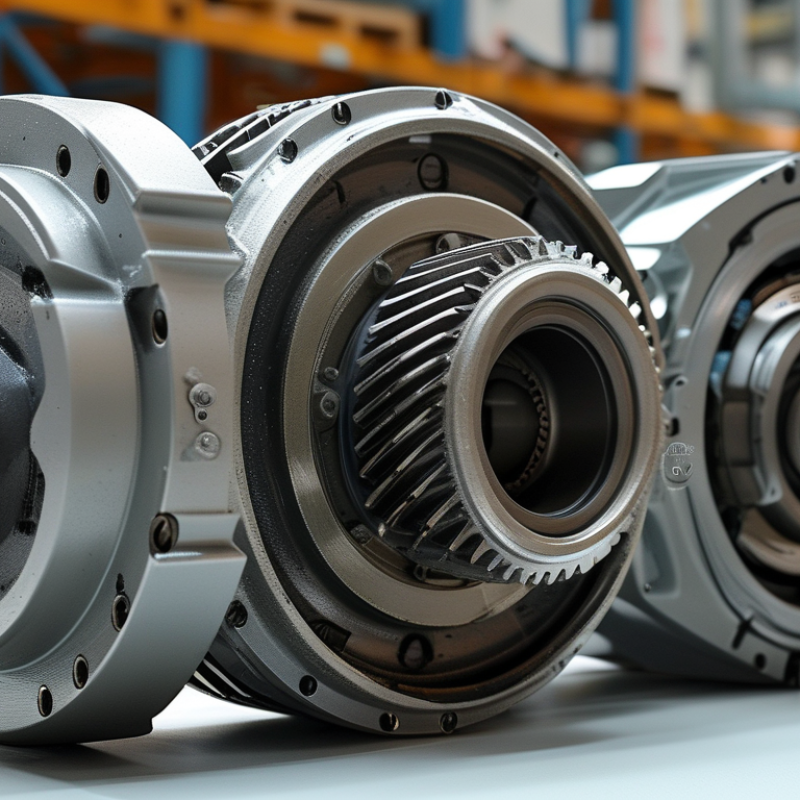
An electric gearbox combines an electric motor, reduction gears, shafts, bearings, seals, and a protective housing. The motor spins quickly but produces limited torque at low speeds. Gears reduce rotational speed and multiply torque at the output shaft. A 9:1 ratio increases torque substantially. Output speed falls accordingly. This basic trade-off drives many electric vehicles and industrial machines.
The International Energy Agency’s Global EV Outlook 2024 recorded nearly 14 million electric-car sales in 2023. Electric cars represented about 18% of global car sales. This growth increases demand for compact, efficient drive units. Inside the gearbox, helical or planetary gears transfer motion through carefully controlled contact points. Lubricant reduces friction, while bearings support radial and axial loads. Heat remains a practical problem. No gearbox reaches perfect efficiency. Energy losses appear as heat, noise, and vibration.
A reliable evaluation needs more than a claimed efficiency percentage. Global buyers should request gear ratios, rated torque, peak torque duration, thermal test results, noise data, and service intervals. A clean laboratory result may not represent dusty roads or repeated hill climbs. That difference deserves attention. Supplier documents can also simplify real operating conditions too much. Test data under defined temperatures and loads offers stronger evidence. The gearbox is small, but its design affects range, acceleration, durability, and maintenance costs.
Comparing electric gearbox suppliers requires more than checking rated torque and purchase price. Start with the application’s actual load profile, including startup peaks, duty cycles, speed changes, and operating temperature. A gearbox rated for continuous torque may fail under repeated acceleration. Ask suppliers for peak torque limits, service factors, gear ratios, and allowable radial and axial loads. Numbers matter.
Backlash is critical in robotic joints, positioning systems, and automated inspection equipment. Request measured backlash values, not vague claims such as “high precision.” Efficiency also affects heat, battery life, and operating cost. A credible supplier should provide efficiency curves at different speeds and loads. Thermal data matters too. Look for temperature-rise tests, lubrication details, and cooling requirements. Noise measurements, vibration limits, and ingress protection ratings can reveal how the gearbox performs outside the showroom.
Material selection deserves close attention. Hardened gears, bearing quality, shaft design, and housing stiffness influence service life. Ask for fatigue testing, dimensional tolerances, inspection records, and traceable quality procedures. Documentation should include drawings, test reports, maintenance guidance, and realistic delivery capabilities. Experience shows that communication after delivery can matter as much as the gearbox itself. Response times, spare-part access, warranty terms, and engineering support deserve written clarification. I would not rely on a polished sample alone. It may hide production variation. Request production samples and independent verification when failure would be expensive.
For global electric gearbox buyers, supplier quality starts with evidence, not attractive specifications. Request a valid ISO 9001 certificate, certification scope, audit date, and issuing body. The ISO Survey 2022 recorded more than 1.26 million ISO 9001 certificates worldwide. That number shows adoption, not competence. Check whether the supplier controls gear machining, motor assembly, testing, and final inspection internally.
Ask for process capability data on tooth profile, backlash, noise, temperature rise, and sealing performance. A capable supplier should provide control plans, PFMEA records, calibration logs, and batch-level traceability. For automotive projects, IATF 16949 and PPAP experience can reduce launch risk. However, documents can be polished. Randomly compare inspection reports with physical parts. One uncomfortable lesson: a perfect sample may hide unstable production.
Manufacturing capacity requires measurable proof. Review monthly output, equipment lists, shift patterns, bottleneck machines, and preventive-maintenance records. Ask for recent delivery performance, maximum surge volume, and recovery plans after equipment failure. The IEA Global EV Outlook 2024 reported that electric car sales exceeded 17 million in 2023. This demand can pressure gearbox lead times and component availability. A serious supplier should explain its spare tooling, secondary sources, and testing capacity. Visit the factory if possible. Watch operators, material flow, and finished-goods storage. Capacity claims sometimes look better on spreadsheets than on the production floor.
| Evaluation Dimension | Measurable Requirement | Recommended Buyer Benchmark | Evidence to Request | Risk Level if Missing |
|---|---|---|---|---|
| Quality Management | Certified quality-management system covering design, purchasing, production, inspection, and corrective action. | Current ISO 9001 certificate with a scope that includes gearboxes, geared motors, or mechanical power-transmission products. | Certificate number, certification body, validity dates, site address, and audit scope. Verify the certificate with the issuing body. | High |
| Environmental Control | Documented control of energy use, waste, hazardous substances, and environmental compliance. | ISO 14001 certification or equivalent documented environmental-management procedures for the production site. | Certificate or policy, environmental permits where applicable, waste-disposal records, and recent audit findings. | Medium |
| Product Compliance | Regulatory compliance matched to the destination market and the complete powered assembly. | RoHS and REACH declarations for relevant materials; CE documentation when the supplied assembly falls under applicable EU legislation. | Declaration of conformity, technical file summary, material declarations, risk assessment, and component traceability. | High |
| Ingress Protection | Protection of the motorized unit or enclosure against solid particles and water. | An IP rating stated on the datasheet and supported by testing to IEC 60529; select the rating according to the installation environment. | Test report, rating label, enclosure configuration, cable-entry specification, and confirmation that the tested design matches the offered product. | Medium |
| Gear Material | Material grade, heat treatment, hardness, and case depth for load-bearing gears. | Material and heat-treatment specifications stated on the drawing or control plan, with hardness results recorded by batch. | Material certificates, heat-treatment records, hardness maps, metallurgical reports, and supplier traceability. | High |
| Dimensional Accuracy | Control of gear geometry, bearing seats, shaft dimensions, backlash, and mounting interfaces. | Inspection plan based on approved drawings, with calibrated gauges and recorded critical dimensions for every production batch. | Coordinate-measuring-machine reports, gear-inspection reports, gauge-calibration certificates, and sample inspection records. | High |
| Efficiency and Noise | Operating efficiency, acoustic performance, vibration, and temperature rise under defined load conditions. | Supplier provides test limits at specified speed, torque, duty cycle, ambient temperature, and lubrication condition. | Performance curves, dynamometer results, noise measurements, vibration data, and the complete test setup description. | Medium |
| Load and Life Rating | Rated torque, radial and axial loads, service factor, duty cycle, and expected operating life. | Selection is supported by application calculations using the required speed, torque, duty cycle, ambient conditions, and service factor. | Load calculation, rating tables, service-factor methodology, life assumptions, and application references with comparable duty cycles. | High |
| Production Equipment | Availability of machining, gear cutting, heat treatment, assembly, and final-test capabilities. | Critical processes are performed in-house or controlled through qualified subcontractors with documented inspection and traceability. | Process-flow chart, equipment list, production-floor audit, subcontractor controls, maintenance records, and capacity plan. | Medium |
| Manufacturing Capacity | Verified monthly capacity for the required gearbox family, configuration, and quality level. | Capacity is stated by model family and shift pattern, with reserved capacity for forecasted demand rather than only total factory output. | Capacity calculation, bottleneck analysis, available machine hours, staffing plan, current loading, and production schedule. | High |
| Lead Time | Time from approved purchase order and released drawings to shipment. | Supplier gives separate lead times for prototypes, standard production, customized production, and tooling; delivery performance is tracked monthly. | Recent on-time-delivery data, production schedule, order-to-shipment records, and written assumptions for the quoted lead time. | Medium |
| Incoming Inspection | Verification of steel, bearings, seals, lubricants, motors, and electrical components before use. | Critical incoming materials are inspected against defined specifications and linked to lot-level traceability. | Incoming-inspection standards, supplier qualification records, material certificates, nonconformance reports, and lot labels. | Medium |
| Final Testing | Functional, leakage, noise, vibration, electrical, and dimensional checks appropriate to the product design. | Every shipment receives documented final inspection; tests are defined by product type and customer specification. | Inspection report template, test equipment list, calibration records, acceptance limits, and sample completed reports. | High |
| Traceability | Ability to trace a finished unit to materials, operators, process records, inspection results, and shipment data. | Unique serial, batch, or lot identification is maintained from incoming material through final delivery. | Traceability procedure, sample serial-number record, ERP or production-record screenshot, and recall procedure. | High |
| Warranty Support | Defined warranty period, exclusions, failure-analysis process, and replacement or repair procedure. | Written warranty terms with response times, root-cause analysis, corrective-action reporting, and spare-parts availability. | Warranty policy, claims statistics, sample 8D report, spare-parts list, and regional service-contact process. | Medium |
| Export Readiness | Capability to prepare international documentation and packaging for the destination market. | Commercial invoice, packing list, export classification, installation documentation, multilingual labels where required, and compliant packaging. | Anonymized shipping document samples, packaging specifications, export references, and destination-country documentation checklist. | Medium |
| Supplier Evaluation Score | Weighted assessment of quality, compliance, engineering, capacity, delivery, and service. | Use a documented scoring model; a practical approval threshold is at least 80 out of 100, with no critical failure in safety or compliance. | Completed audit checklist, corrective-action status, score calculation, approval record, and review date. | Low |
China leads the 2026 electric gearbox supply landscape through scale, battery integration, and dense manufacturing clusters. The International Energy Agency reported over 17 million electric car sales globally in 2024, exceeding one-fifth of new car sales. This demand supports large production runs for reduction gears, e-axles, and compact transmission units.
Europe remains strong in premium engineering, testing, and high-efficiency drivetrains. Germany, Italy, and Central European production zones benefit from established automotive suppliers and strict efficiency targets. The European Automobile Manufacturers’ Association reported that battery-electric vehicles represented about 14% of new EU registrations in 2024. That share is growing, but unevenly. A supplier serving Europe still needs flexible volumes, traceable materials, and cold-weather validation.
Japan and South Korea lead in precision machining, hybrid-compatible gear systems, and export reliability. North America is expanding local assembly, especially for commercial vehicles and regional electric platforms. MarketsandMarkets expects the global electric vehicle powertrain market to grow strongly through 2030, with integrated drive units gaining attention because they reduce weight and installation space. Yet market leadership is not permanent. Some suppliers still underestimate software calibration, service access, and noise testing. Buyers should inspect factory consistency, gear-life data, inspection records, and response times before selecting a partner. Price alone can mislead.
2026 Best Electric Gearbox Suppliers for Global Buyers?
How to Select the Best Electric Gearbox Supplier for Your Application
Selecting an electric gearbox supplier starts with the application, not the catalog. Define motor power, output torque, speed range, duty cycle, mounting space, and operating temperature. Include shock loads and frequent starts. These details often expose unsuitable designs early.
Ask suppliers for verified torque curves, efficiency data, noise measurements, and thermal limits. Request drawings with tolerances and clear material specifications. A serious supplier should explain its testing process, inspection records, and quality controls. Factory audits, sample testing, and traceable reports provide stronger evidence than polished sales language. Ask about replacement parts and technical support, too.
Compatibility matters beyond mechanical fit. Check the gearbox with the motor controller, encoder, brake, and mounting structure. Confirm sealing performance when dust, moisture, or washdown conditions exist. A lower quotation may appear attractive. However, weak lubrication or poor alignment can create costly downtime. That lesson is easy to overlook. Total cost should include energy use, installation, maintenance, delivery, and expected service life.
Communication is another practical test. Can the supplier answer technical questions without vague promises? Can it manage drawings, prototypes, production changes, and export documents accurately? Sample approval should include real operating conditions, not only a short bench test. No supplier is perfect, and specifications may change during development. Record every assumption, challenge unclear claims, and leave room for independent verification.
: An electric gearbox combines a motor, gears, shafts, bearings, seals, and housing. The motor spins quickly. The gears reduce speed and increase output torque. A 9:1 ratio can greatly raise torque while lowering shaft speed.
Reduction gears help an electric motor move heavy loads from rest. They can improve acceleration, hill climbing, and low-speed control. However, higher torque usually means lower output speed. The trade-off is unavoidable.
Friction, heat, noise, and vibration reduce efficiency. Bearings, gear contact, seals, and lubricant all contribute to losses. Heat may build during repeated acceleration or long climbs. Perfect efficiency does not exist.
Check gear ratios, rated torque, peak torque, and peak duration. Review speed limits, duty cycles, radial loads, and axial loads. Efficiency curves should cover several speeds and load levels. One percentage is not enough.
Thermal results show how the gearbox behaves under sustained work. Ask for temperature-rise data, lubricant details, and cooling requirements. A clean laboratory test may not match dusty roads or hot workshops. Real conditions matter.
Review hardened gear materials, bearing quality, shaft design, and housing stiffness. Request fatigue tests, dimensional tolerances, inspection records, and maintenance intervals. Production samples can reveal variation hidden by a polished demonstration unit. I would not rely on one sample.
Backlash matters in robotic joints, positioning equipment, and inspection machines. Ask for measured backlash values rather than broad precision claims. Small looseness can create visible movement at the output shaft. Precision needs numbers.
Written terms should cover spare parts, warranty limits, service intervals, and response times. Engineering support can matter when noise, vibration, or heat appears unexpectedly. Request drawings, test reports, and realistic delivery information. Communication can fail.
This guide explains what an Electric Gearbox is, how it combines motor power with mechanical transmission, and why it is essential for achieving controlled speed, torque, and motion in automated equipment. It outlines the key specifications global buyers should compare, including power rating, gear ratio, torque output, efficiency, operating speed, noise level, thermal performance, durability, installation requirements, and compatibility with control systems.
The article also presents a practical method for evaluating supplier quality, product testing, certifications, production capacity, customization services, lead times, and after-sales support. It reviews the major characteristics of leading regional supply markets without focusing on specific brands, helping buyers understand differences in manufacturing strength and service capability. Finally, it provides a structured selection process based on application requirements, operating conditions, budget, delivery expectations, documentation, and long-term reliability, enabling buyers to choose an Electric Gearbox supplier with confidence.
